Matching Cardio Equipment to User Profiles for Maximum Retention
.png?width=50&name=ICONES%20KNOWLEDGE%20(500%20x%20500%20px).png)
Key Takeaways: Cardio equipment is far from one-size-fits-all. Tailoring cardio selection, from low-impact recumbent bikes to high-intensity studio cycles, to specific user demographics elevates workout consistency, improves member retention, and drives conversion for commercial gym operators and equipment distributors.
How choosing the right cardio equipment drives gym retention
Whether walking onto a gym floor or choosing equipment for a residential space, the immediate assumption is that all cardio machines serve the exact same purpose: burning calories and raising the heart rate. However, treating cardio equipment as interchangeable is a costly mistake for gym owners and equipment distributors alike.
Different users have distinct physical needs, training goals, and joint considerations. Matching the right biomechanics to the ideal rider profile removes friction from the workout, boosts member confidence, and ultimately drives retention and sales conversions.
So, what sets these cardio lines apart?
On a Upright Bike, riders sit tall with the pedals positioned directly beneath their hips. This position primarily targets the quads and calves, requiring subtle core engagement to maintain an upright posture. It’s perfect for anyone seeking a comfortable, familiar ride that feels just like a traditional outdoor bicycle.
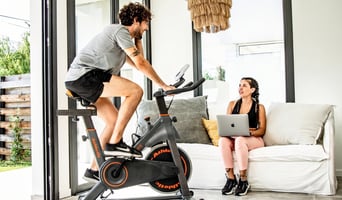
In the Spinning Bike, riders lean forward over the handlebars in a fast racing posture. Seamless manual or digital resistance allows users to transition effortlessly between heavy seated climbs and standing sprints. This is the go-to for high-performance training, intense calorie burn, and full-body conditioning.
Ellipticals engage the entire body through a fluid, gliding motion as the arms and legs move in tandem. It delivers high caloric output with zero impact on the joints, making it the perfect solution for members managing joint sensitivity or anyone looking for a cohesive upper-body and lower-body workout.
Featuring a wide, contoured seat with full lumbar support and forward-facing pedals, Recumbent Bikes are built for comfort. The step-through frame design makes getting on and off completely effortless. While primarily targeting the legs, it is the ideal choice for anyone dealing with lower back pain, spinal discomfort, or accessibility needs.
What else do these machines deliver?
Beyond their core functions, modern technology brings new key features and advantages to these machines. Magnetic resistance and a belt-drive system eliminate mechanical friction and chain noise, resulting in a much smoother stride and lower maintenance requirements. Accessibility is also essential for attracting a diverse audience, features like step-through designs and easily adjustable seats are absolute must-haves.
For an added element of gamification, interactive screens, MagSafe (wireless fast charging), and virtual training app connectivity make the workout experience increasingly connected. Users can easily track their progress right on their smartphones in their favorite fitness app.
Understanding all of these details is crucial for capturing interest and building customer loyalty when pitching the product to clients or demonstrating its features to users.
The New 8500 Pro Series of bikes and ellipticals covers all of these points with a robust frame built for long hours of use, backed by the trusted quality of an Athletic product. Boasting a comprehensive and diverse portfolio, this line is designed to cater to any client profile, ensuring you have the ideal solution for every sales opportunity.
Frequently Asked Questions (FAQ)
Q: Why is a recumbent bike better for members with lower back pain than an upright bike?
A: Recumbent bikes feature a reclining bucket seat that supports the lumbar spine and distributes body weight over a larger surface area. Pushing pedals forward rather than downward takes pressure off the lower back and hip flexors.
Q: How does belt-drive magnetic resistance reduce maintenance for fitness facilities?
A: Belt-drive magnetic systems operate without physical contact or heavy metal chains. This eliminates chain lubrication, tension adjustments, and felt pad replacement, keeping machines running quietly with minimal downtime.
Sources: Athletic Vision Fitness Data | American College of Sports Medicine (ACSM) | Journal of Biomechanics.